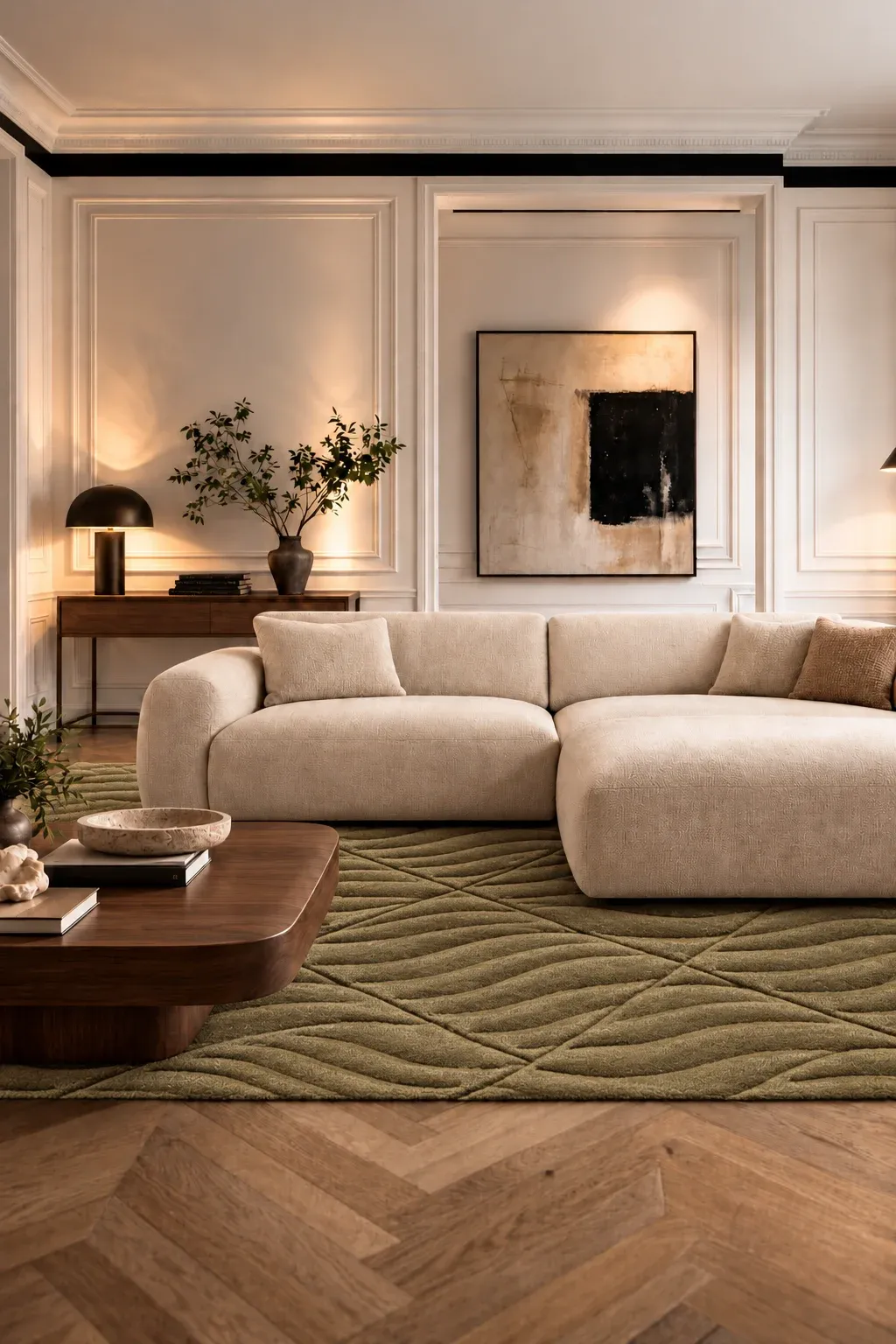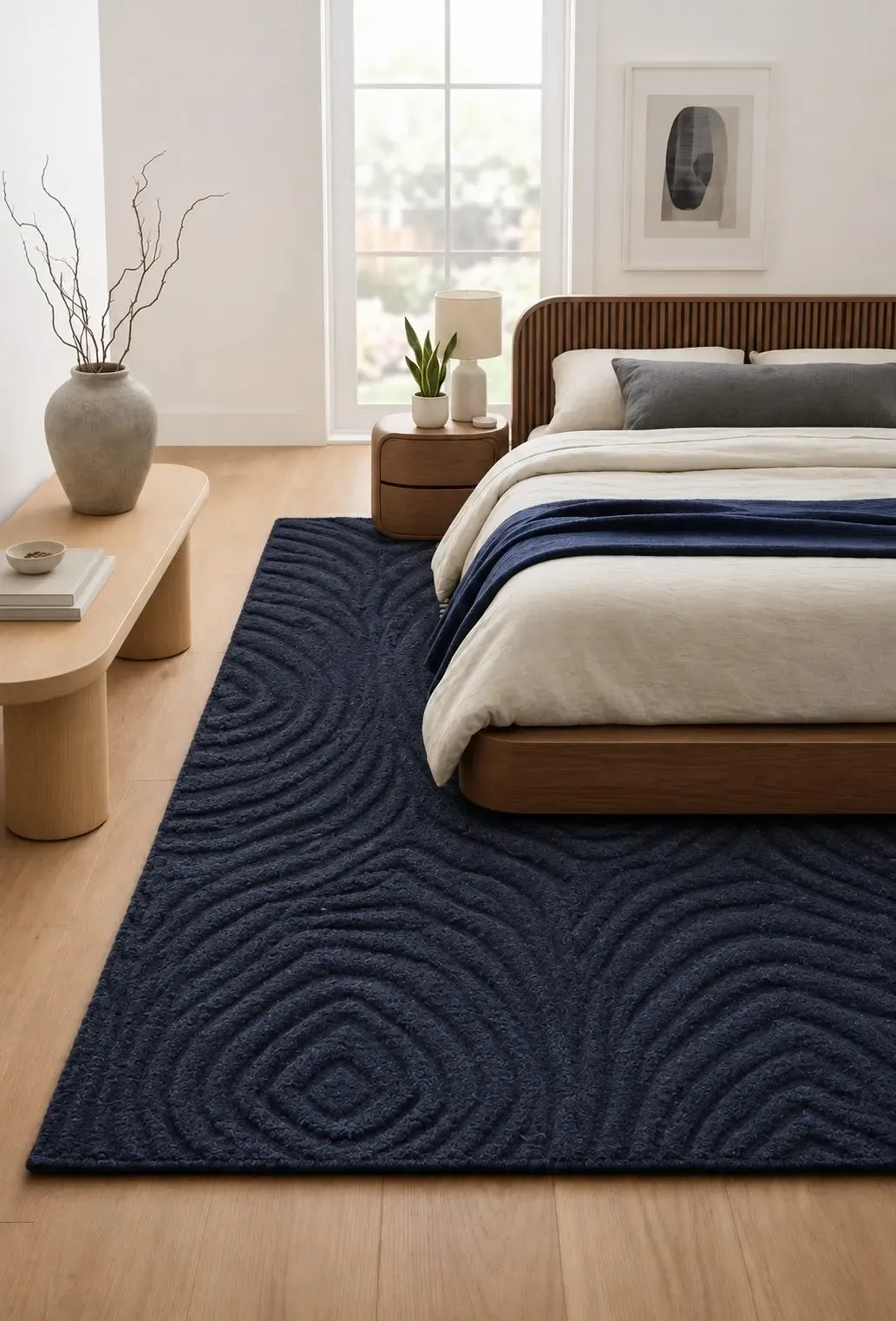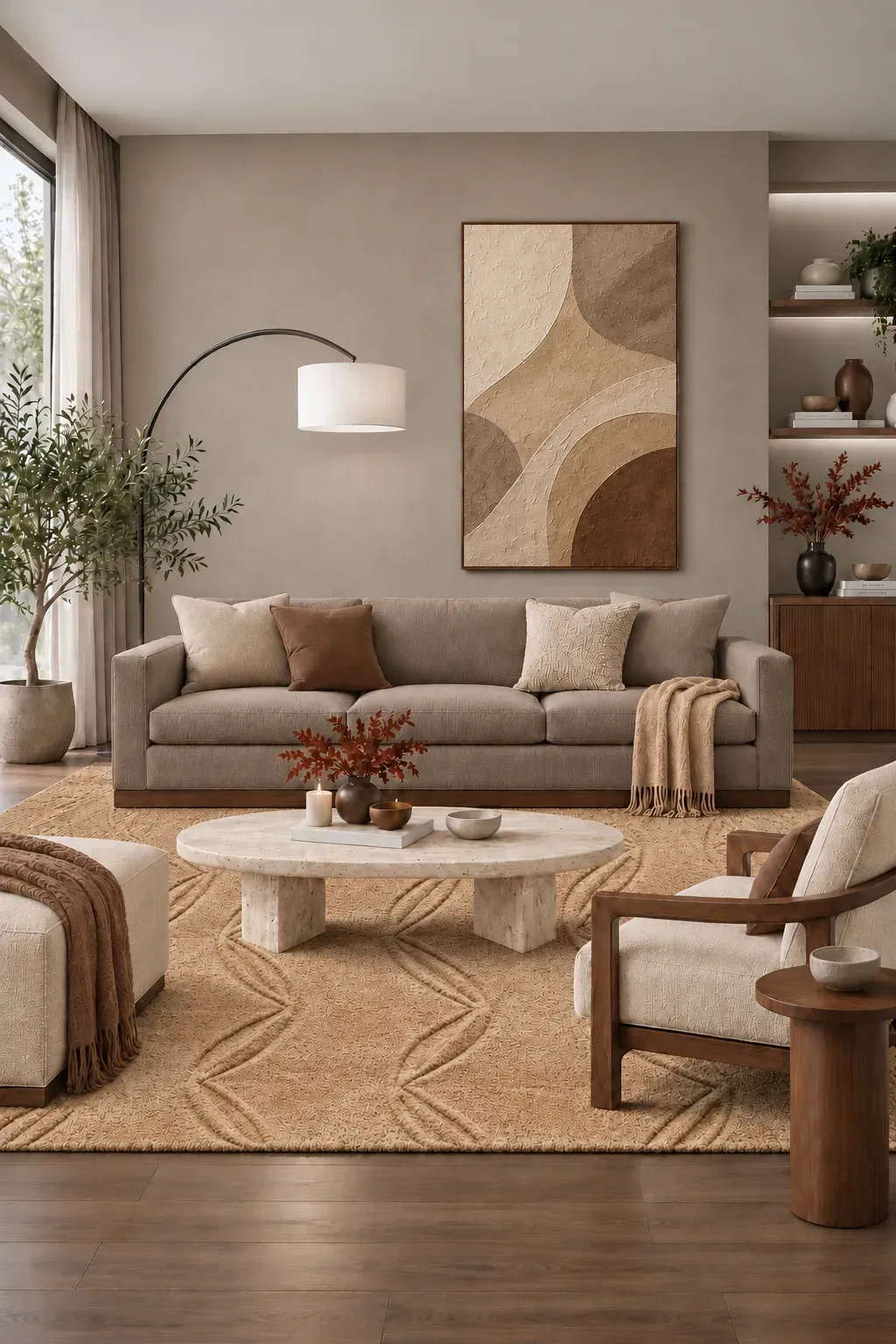
A rug can look perfect in a photograph and feel wrong at home. The difference usually comes down to context.
Your room changes how colour and texture appear. Scale determines how the rug sits among the furniture. Daily use changes the equation again.
The right designer rug should suit the room before it impresses it. Look closely at its construction, then imagine how it will be lived with. The details below help turn that first attraction into a more considered choice.
Begin With the Room Before Looking at the Rug
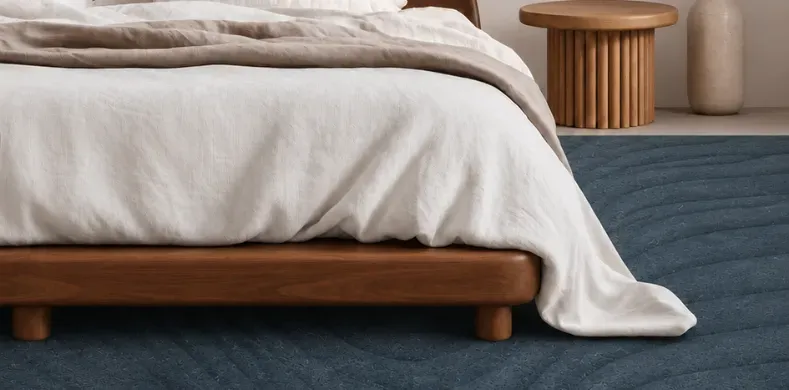
Your room should set the brief before you look at any rug.
Notice what already dominates the space. Strong stone or dark timber may suggest a softer surface beneath the furniture. Large artwork might call for a quieter rug, while a restrained interior may welcome more expressive patterns.
Daily use matters just as much. A formal sitting room has different demands from a busy family lounge. The same handmade rugs will experience different levels of wear in those settings.
Ask yourself four things first:
- What feels missing in the room? Perhaps it needs softness or definition.
- Which furniture pieces need visual connection? The rug can bring them together.
- Does the space need calm or contrast? Existing finishes can help guide that decision.
- How much foot traffic will it receive? Usage will influence the choice of material and construction.
Those answers narrow your options without making the process rigid. They also give you a clearer sense of the area the rug needs to hold.
Scale Can Change the Entire Room
Size can make a beautiful rug feel completely wrong.
A rug that is too small often leaves furniture looking disconnected. A better proportion pulls separate pieces into one visual arrangement.
For example, living rooms usually need enough rug beneath the main seating. Likewise, dining rooms need extra space around the table so chair legs remain supported when someone sits or stands. Bedrooms often feel more balanced when the rug extends beyond the bed.
Standard dimensions work well in many spaces. Some layouts, however, sit between the available sizes or call for a different shape.
Let’s say your home has a long room with two seating areas. One ready-made rug may leave an awkward boundary between them. Two separate rugs might define the groups more comfortably, while a made-to-order designer rug could connect them if that suits the intended layout.
That is why we offer custom sizing and design services at Giada. It is not simply a luxury detail. It can solve proportion problems that standard sizes cannot.
Once the outline feels right, consider what you want the surface to feel like beneath your feet.
Material Changes More Than Texture
Material shapes how your rug feels, how it responds to light and how it handles daily use. These qualities are closely connected, but each deserves attention.
Different fibres bring different possibilities:
- Wool: It feels warm underfoot and offers natural resilience. It can suit regular use well when the construction is appropriate.
- Silk: It adds luminosity and a finer surface. Quieter spaces can carry its delicacy beautifully.
- Mohair: It can bring softness and lustre. The final texture depends on the weave and any other fibres used alongside it.
- Hemp: It offers a drier, organic texture. It works well within tactile interiors.
- Blended fibres: They bring different qualities together. Wool and silk can balance a matte surface with subtle sheen.
Our guide to different rug fibres explores these characteristics in more detail.
Let your lifestyle help decide which qualities matter most. A family lounge needs more resilience than a private bedroom.
When commissioning handmade rugs, ask which fibre combinations and finishes are available. That flexibility comes from the maker’s capabilities, rather than being a feature of every handmade piece.
Understand How the Rug Is Made
The rug-making technique tells you what sits beneath the design. Each method gives the surface a different character:
- Hand-knotted rugs: Built knot by knot on a loom, this slower method gives artisans close control over the developing pattern. Yarn choice and knot density influence how much detail the surface can carry.
- Hand-tufted rugs: A tool pushes yarn through a primary backing, typically with adhesive helping secure it. These rugs are also handmade, though their structure differs from hand-knotted work.
- Handwoven rugs: Yarns interlace on a loom to form the rug. The weave itself can become part of the design, giving even a restrained surface a visible rhythm.
- Machine-made rugs: Automated production creates repeatable designs and can produce highly consistent patterns. Quality and performance still depend on the materials and construction.
Handmade rugs, especially hand-knotted pieces, can offer distinctive surface character and opportunities for customisation. Subtle variations may reveal something of the making, while careful finishing gives the design its intended appearance.
At Giada, our rug-making heritage spans four generations, supported by our family-owned mill in India. Our collection includes several construction methods, allowing us to consider the technique alongside the design.
That experience keeps the craft close to the room the rug will enter.
Look Closely at the Rug Manufacturer
The finished rug matters, but the maker behind it matters too.
A rug manufacturer influences material selection and the way a design moves into production. Finishing and quality control help determine how the piece looks on arrival and performs over time.
You should be able to ask:
- Where is the rug made? Provenance tells you where the craft actually happens.
- Who selects the fibres? Material knowledge begins long before weaving.
- Which weaving methods does the maker use? Technique affects texture and can influence longevity.
- How closely does the rug manufacturer work with artisans? Ask how the design brief reaches the people making the piece.
- Can size, colour, material and pattern change? Customisation should have a clearly explained scope.
- Who checks the finished piece? Quality control should never feel vague.
Through our family-owned mill, we keep design decisions connected to the making. That relationship helps us explore what a room needs with an understanding of how it can be achieved.
Colour Needs to Live in the Room, Not Just on a Sample
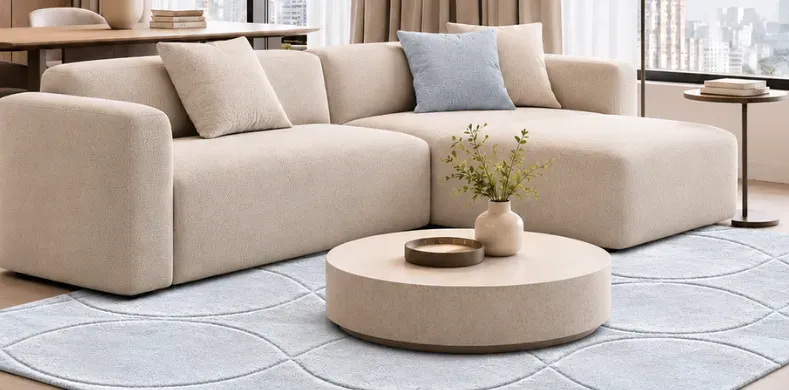
A colour that feels warm in one setting may appear cooler in another. The light falling across the rug changes its appearance, as do the finishes surrounding it.
- Daylight changes through the day and varies with the room’s orientation.
- Artificial lighting can alter the apparent warmth and depth of a shade.
- Flooring, upholstery and wall finishes change how the same colour reads.
That is why samples need context.
Place them near the materials already in your room. Look at them at different times of day. Lay them flat on the floor, as the finished rug will sit, and view them from more than one direction.
For example, a pale designer rug may create calm in one interior. The same tone can blend too closely with the floor in another.
Pattern deserves the same consideration. A room with expressive furniture may benefit from restraint. A quieter interior can often carry stronger movement.
There is no universal formula. Your preferences matter alongside the relationship between the rug and its surroundings.
These decisions are best developed together. A change in fibre or pile can alter how the chosen colour appears, making physical sampling especially useful for bespoke work.
Think About How the Rug Will Age
A new rug should look beautiful now and still feel right later.
Daily traffic leaves its own trace. Strong sunlight may affect colour, while heavy furniture can compress the pile beneath its feet.
Wool can retain its character well with appropriate care. Silk usually needs more careful placement. The construction and finish will influence how each material responds over time.
Ask about care before you buy:
- How should the rug be cleaned?
- Does it need regular rotation?
- Which spaces suit the material best?
- How should spills or pressure marks be handled?
A knowledgeable rug manufacturer should answer those questions without vague promises.
Handmade rugs can age beautifully when the fibre suits the room. Their surfaces may develop character with use, but wear should not be mistaken for a guaranteed improvement in appearance.
That is why longevity belongs in the buying decision. You are not only choosing what the rug looks like on arrival. You are choosing how it will live with you.
Before confirming an order, also check the full price and expected lead time. For a bespoke piece, understand the sample-approval process and any handmade tolerances, along with the cancellation and returns terms. These details deserve the same clarity as the design itself.
A Rug Should Feel Considered, Not Added
A new rug should make your room feel more resolved.
The designer rug you choose should belong within the scheme and suit the way you actually live. A beautiful surface becomes more meaningful when its proportions feel right and its materials answer everyday needs.
At Giada, some projects begin with a piece from our handcrafted rug collection. Others develop through our bespoke design process. Either way, we bring the same care to the relationship between fibre and room.