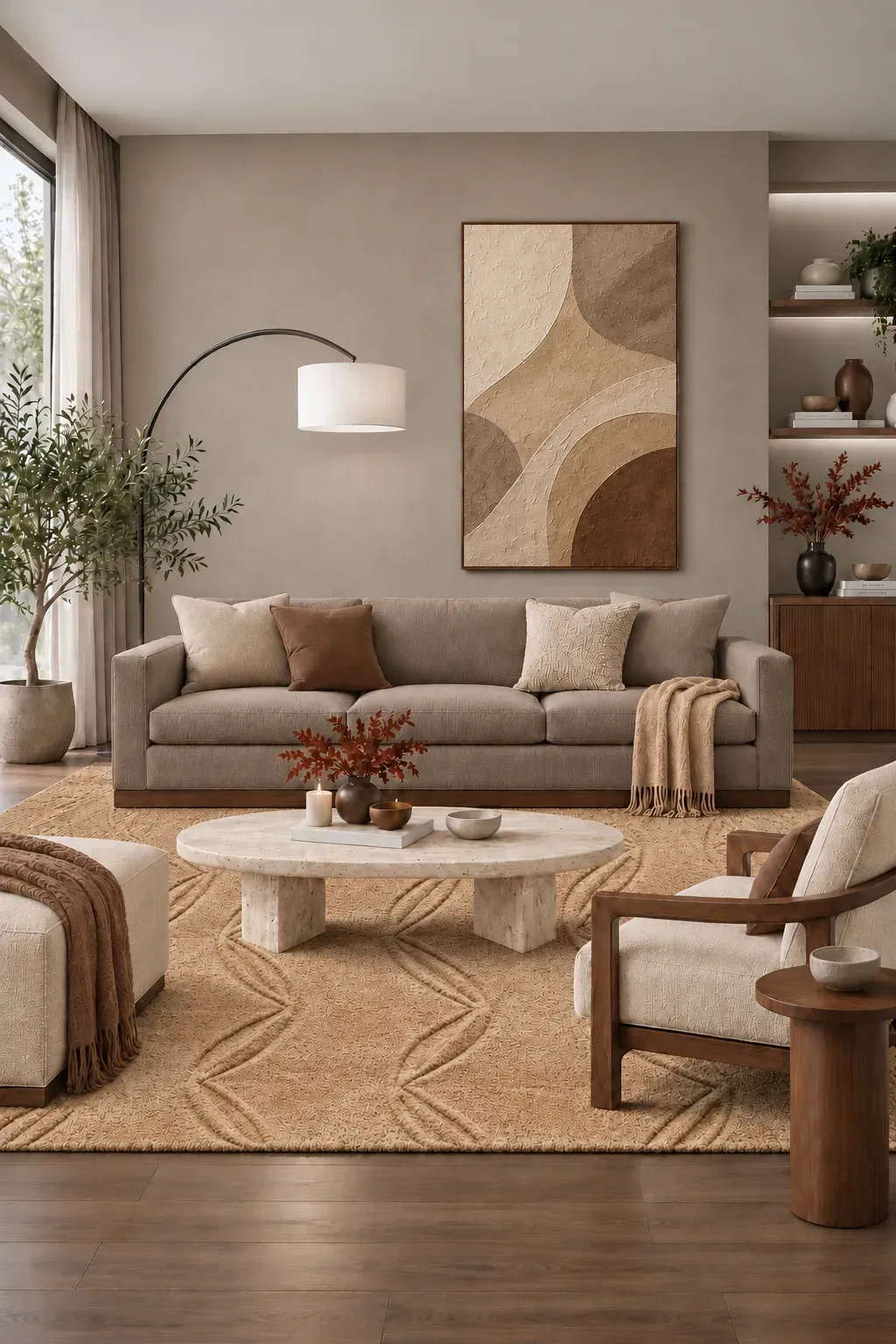
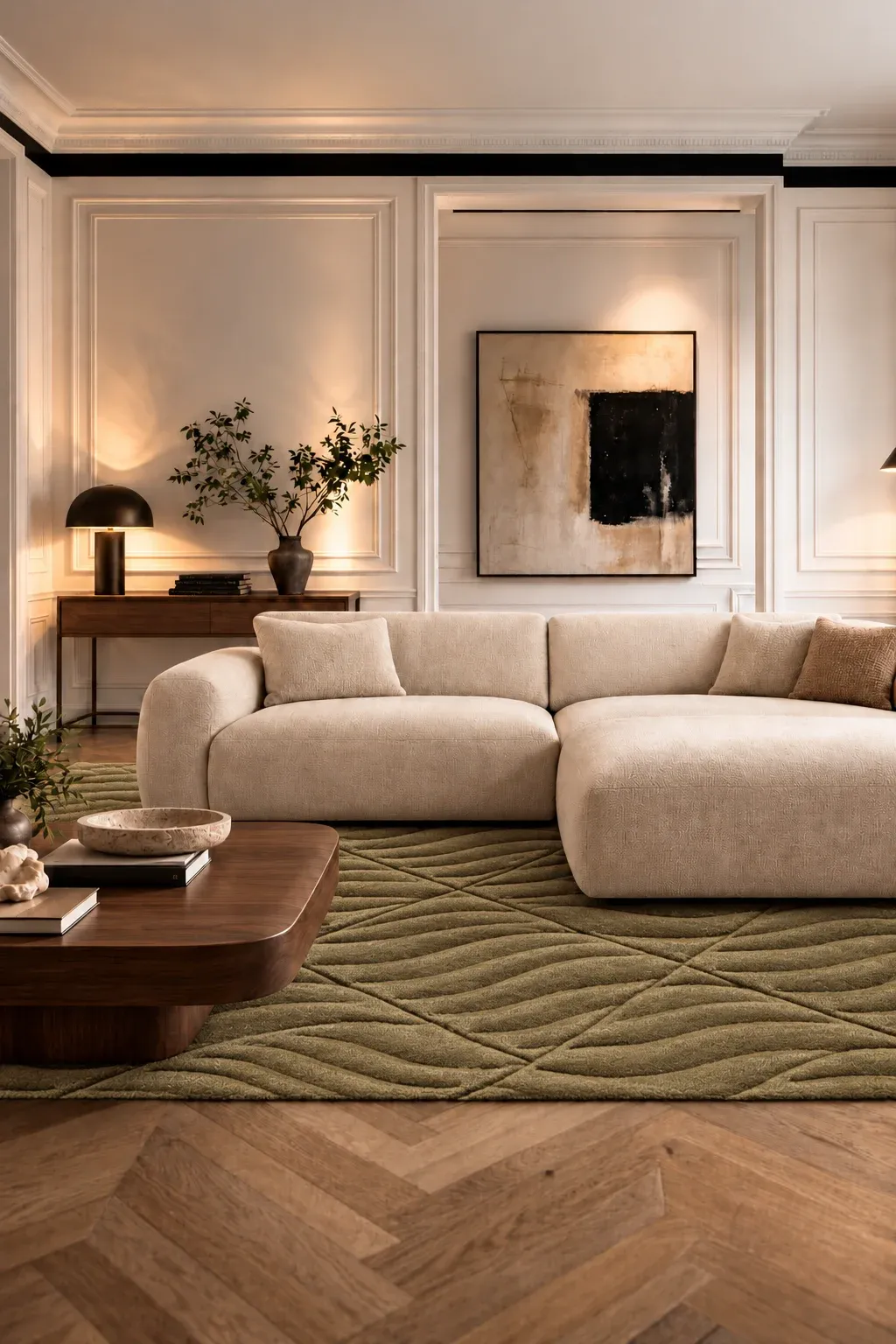
A living room gives itself away before anyone says a word.
There is the chair where a book stays open or the stretch of sofa that invites someone to linger. A rug draws these familiar places together, giving the room a shared foundation.
Choosing between living room area rug sizes begins with that arrangement. The right dimensions allow furniture to feel connected while leaving space to move comfortably around it.
Why Living Room Area Rug Sizes Are the Quiet Foundation
A rug does more than soften your steps. Its edges help define the seating area, gathering separate pieces into a place for conversation.
Too small, and it may leave the sofa and chairs looking disconnected. A generous rug can bring them together, even in a compact room. Its success depends on where the edges fall, rather than size alone.
This is why living room carpet sizes deserve real thought, not a decision made in a rush.
Finding the Right Fit for Your Living Room
There is no single size that suits every home. A long sofa with a chaise needs a different footprint from two chairs beside a fireplace. Begin with the furniture you want the rug to connect to, then look at the floor around it.
- Know Your Sizes
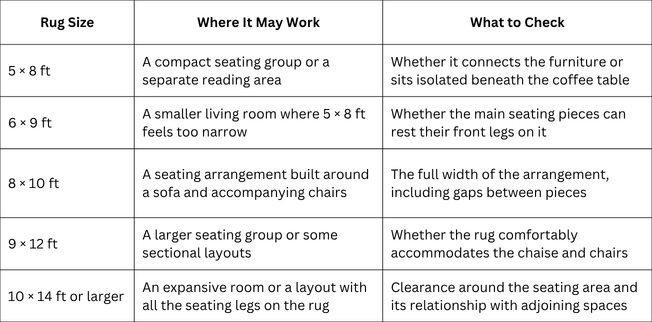
Living room area rug sizes generally fall into a few familiar ranges, but these are starting points rather than promises of a particular fit. All dimensions below are in feet.
An 8 × 10 ft rug may suit one sofa-and-chair arrangement yet fall short in another. Furniture dimensions matter more than the number of pieces alone.
- Let Your Furniture Lead
Look at the seating as one composition. The rug should connect the pieces that belong together, with its placement guided by their proportions. 1. All seating legs on the rug. This can give a generous arrangement a sense of enclosure. Allow some rug to remain visible beyond the furniture so it does not appear tightly contained. 2. Front legs on the rug. This connects the seating without requiring the rug to extend beneath every piece completely. 3. Coffee table only. A smaller rug can work as an intentional accent, but it may do less to unite the seating. Check that its edges do not look lost between the surrounding pieces. These approaches can be adapted. A chair may sit entirely on the rug while the sofa rests with only its front legs supported. What matters is whether the arrangement feels connected.
- Read the Room
The exposed floor gives the rug an outline. In an enclosed room, a border of roughly 12–18 inches can be a useful starting point, where the layout allows. A compact room may need less. There is no need to force an identical gap along every wall. Furniture placement and doorways may call for a different balance. In an open-plan space, judge living room carpet sizes against the seating zone rather than the entire floor. The rug can define that area without extending towards distant walls. An angled wall or bay window does not automatically require an irregular rug. A rectangle may still sit beautifully within the furniture arrangement, leaving the architecture visible around it.
- Measure the Arrangement Before You Decide
A few minutes spent marking the floor can make the choice much clearer: 1. Place the furniture as you intend to use it. Measure the overall seating footprint, including the chaise if you have a sectional. 2. Mark the proposed rug outline with floor-safe tape, testing it discreetly first. Compare two sizes if the choice is close. 3. Walk through the room. Check door swings and make sure the rug edge does not create an awkward transition along a busy route. 4. Sit in each seat and look across the arrangement. Confirm that the rug reaches the furniture you want it to connect. For example, if a sofa is 8 ft wide, an 8 ft rug edge aligned with it will leave no extension at either end. Turning a suitable rectangular rug so its longer edge follows the sofa may improve the proportions.
When a Custom Fit Makes Sense
Sometimes the standard options come close without quite resolving the room. One size leaves a chair outside the arrangement; the next reaches too far into a passage.
A few signs that it may be time to consider a custom rug design are:
- The seating group needs a proportion that standard dimensions do not offer
- A hearth or fixed feature limits where the rug can extend
- An unusual footprint would benefit from a different shape
- You want to develop the palette alongside the room’s fabrics and finishes
A designer rug need not be custom-made to feel right. An existing piece may already have the proportions you need. Bespoke work offers greater flexibility when those requirements become more particular.
At Giada, we work with you to explore those possibilities. Our bespoke design process considers the layout alongside the materials, with physical samples helping refine the colour and texture.
Custom dimensions also require care. Handmade rugs have dimensional tolerances, so measurements and any critical clearances should be confirmed before production. Colour matching is assessed through sampling, rather than treated as an exact guarantee.
Whether you begin with our rug collection or a new custom rug design, the aim is a piece that feels at ease within the room.
The Room You Are Building
A rug is a silent yet meaningful choice. Its proportions become part of how the living room is experienced, from the view through the doorway to the feeling beneath a favourite chair.
Let the furniture guide your measurements, then give yourself time to see the outline in place. A thoughtfully sized designer rug can bring the room together with a sense of belonging that feels entirely natural.