Luxury rugs can make a bedroom feel more welcoming, offering softness beneath bare feet and a gentle frame around the bed. Their proportions help that feeling take shape.
For many queen-bed layouts, an 8 × 10 ft rug is a useful starting point. A smaller room may suit a 6 × 9 ft piece, while a more generous bedroom can accommodate a larger rug. Placement matters as much as the dimensions.
Start With the Dimensions of a Queen Bed
A standard US queen mattress measures 60 inches wide by 80 inches long. Sizes sold as “queen” can vary between markets, so check your own mattress and frame.
That measurement gives you a useful starting point. Still, the mattress alone does not define the full footprint.
Your bed frame may extend beyond the mattress. A substantial headboard can also add visual weight. Nightstands widen the entire arrangement even further.
Measure the frame at its widest point, including an upholstered surround or projecting footboard. If the nightstands will sit on the rug, include their combined span too.
At Giada, we look beyond mattress dimensions. We consider how the full bed sits within the room.
The aim is enough visible rug to give the bed a comfortable setting, with an exposed floor where the layout needs it.
What Size Rug Under a Queen Bed Works Best?
The answer depends on how much coverage you want.
Several standard sizes can work beneath a queen bed, but each creates a different result:
Orientation makes a considerable difference. With the 10 ft edge of an 8 × 10 ft rug running across a 60-inch mattress, there would be 30 inches of rug on either side when centred. The actual bed frame will reduce that exposed width.
Use these dimensions to compare possibilities, then test the outline in the room. No single size provides the best balance in every bedroom.
Match the Rug Size to Your Bedroom, Not Just the Bed
The same queen bed can need different rug sizes in different rooms.
A compact bedroom may feel crowded if the rug leaves too little clearance around doors or nearby furniture. A larger primary bedroom may make a smaller rug look lost.
Look at the room as one composition. How much flooring would you like to leave visible? Notice the distance between the bed and the walls, then consider how neighbouring furniture sits within that space.
A 6 × 9 ft rug may suit a smaller room beautifully. The same bed may need an 8 × 10 ft rug elsewhere, giving the arrangement a broader frame without reaching too far towards the walls.
Your nightstands also affect the visual width. Large nightstands create a broader sleeping zone. That may call for more generous rug coverage, particularly if they will sit on the rug alongside the bed.
At Giada, we let the room guide these decisions. The bed gives you the starting measurement, but the room helps determine the final proportions.
That relationship allows rugs to feel at home, with enough surface to bring softness into the room and enough exposed floor to frame it.
Consider the Placement
Placement changes how large the rug feels once installed. Before deciding which size to place under your queen bed, consider where you want to encounter its softness.
- Lower Two-Thirds of the Bed
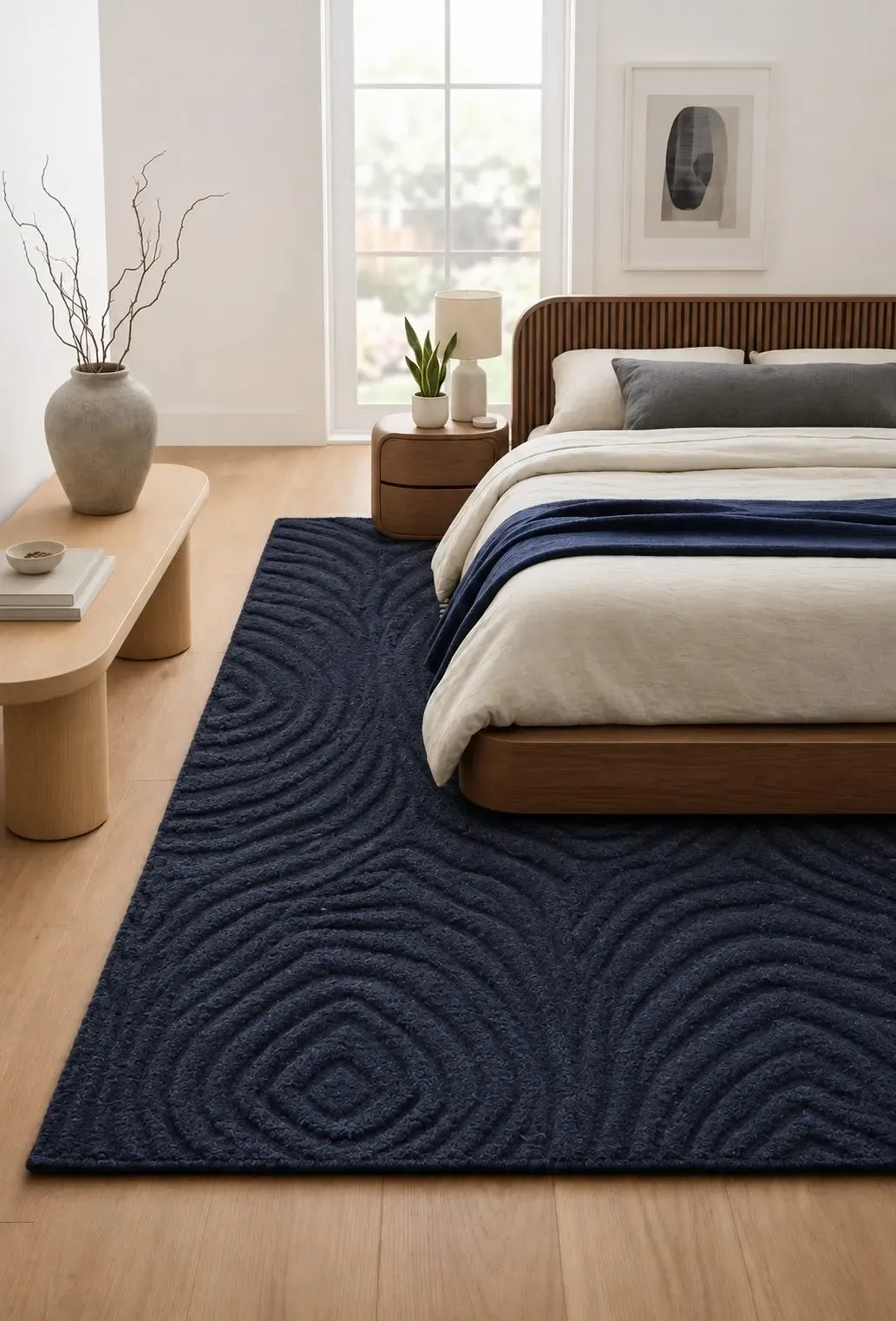
Here, the rug begins below the nightstands and extends beyond the foot of the bed. The upper portion of the room retains more exposed flooring, while the rug gathers the lower bed into its surface. “Lower two-thirds” describes a general arrangement rather than a precise measuring rule. Move the starting edge to suit the frame, making sure there is a rug where your feet naturally meet the floor.
- Full Bed Placement
A rug beneath the entire bed creates a more continuous frame. Its edges remain visible along the sides, with an extension beyond the foot. Starting farther towards the headboard uses more of the rug’s length. Check the remaining coverage at the foot before choosing this arrangement, especially if a bench sits there.
- Bed and Nightstands Together
Including the nightstands gives the whole sleeping area a shared foundation. This can feel particularly comfortable in a spacious bedroom, where there is room for the rug to extend beyond the furniture. Check that each nightstand sits securely, with all its feet on the same surface. The required rug width depends on the complete arrangement, rather than the mattress alone.
Leave Enough Rug Around the Bed
The most useful extension is the one you feel each morning. Around 18–24 inches beyond each side of the bed frame is a helpful starting point for comfortable footing, where space allows.
A broader edge may suit a generous bedroom. A narrower one can still work, provided it reaches the places where you step in and out of bed.
The foot of the bed also needs attention. Leave enough visible rug to give the frame a setting, accounting for any bench and the route around it.
Luxury rugs reveal more of their texture when some surface remains uncovered. Give the weave room to be appreciated, rather than letting the furniture conceal nearly all of it.
Use These Quick Tips Before You Finalise the Size
A few simple checks can make the proportions easier to judge before ordering:
- Measure the full bed frame, not only the mattress.
- Include nightstands when they sit within the rug area.
- Mark the proposed outline with floor-safe tape, testing it discreetly first.
- Check bedroom doors and wardrobe doors for clearance.
- Notice how much flooring remains visible around the edges.
- Allow for the rug’s thickness and any underlay.
Walk around the marked outline, then sit on each side of the bed. You will often notice a missing stretch of coverage more readily this way than on a floor plan.
If two sizes seem possible, mark both in turn. The difference becomes clearer when seen beside your own furniture.
When a Made-to-Order Rug Works Better
Standard sizes work well in many bedrooms. Still, some spaces need a different proportion. Built-in cabinetry may limit one edge, or the sleeping arrangement may be wider than standard sizes comfortably accommodated.
Made-to-order luxury rugs offer flexibility when those details cannot be resolved through placement alone. At Giada, we explore custom dimensions around your layout, alongside the surface you want to live with.
Our approach also gives you more control over materials and colour. A physical sample can help you see how the chosen fibres sit beside the bedding and flooring.
As a rug manufacturer with a family-owned mill in India, we keep these design decisions connected to the making. Our bespoke design process develops the brief before production, with measurements and relevant handmade tolerances confirmed along the way.
You may find the right starting point within our luxury rugs collection, or bring us a room that calls for something more individual.
The Right Size Should Make the Bedroom Feel Complete
A queen bed needs a rug that supports its presence.
Begin with the frame’s dimensions, then consider where the rug will fall beneath it. The right placement offers softness where you need it and enough visible surface for the design to emerge.
At Giada, we see these proportions as part of the pleasure of a room. A well-sized rug feels familiar beneath your feet, quietly helping the bedroom settle into place.