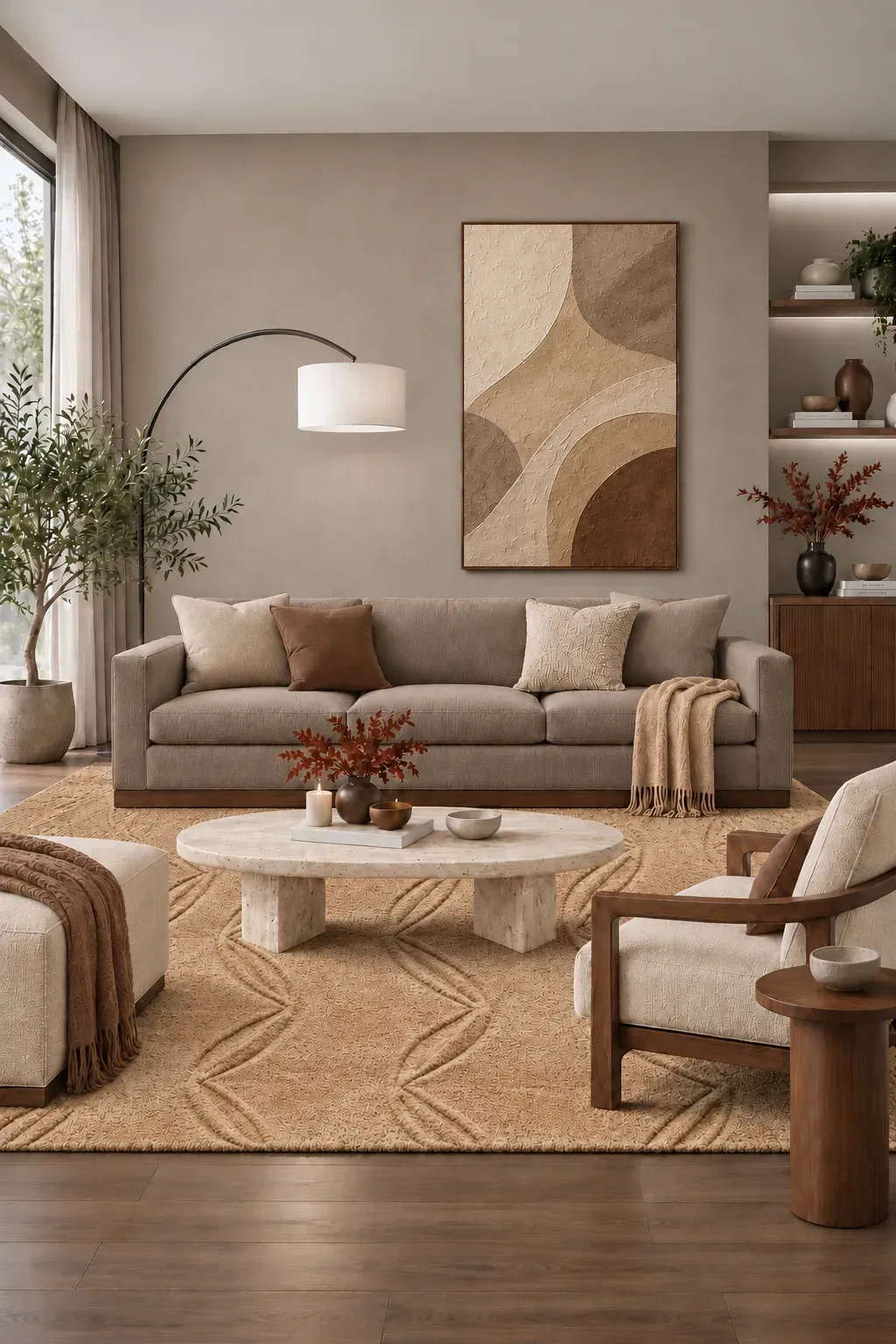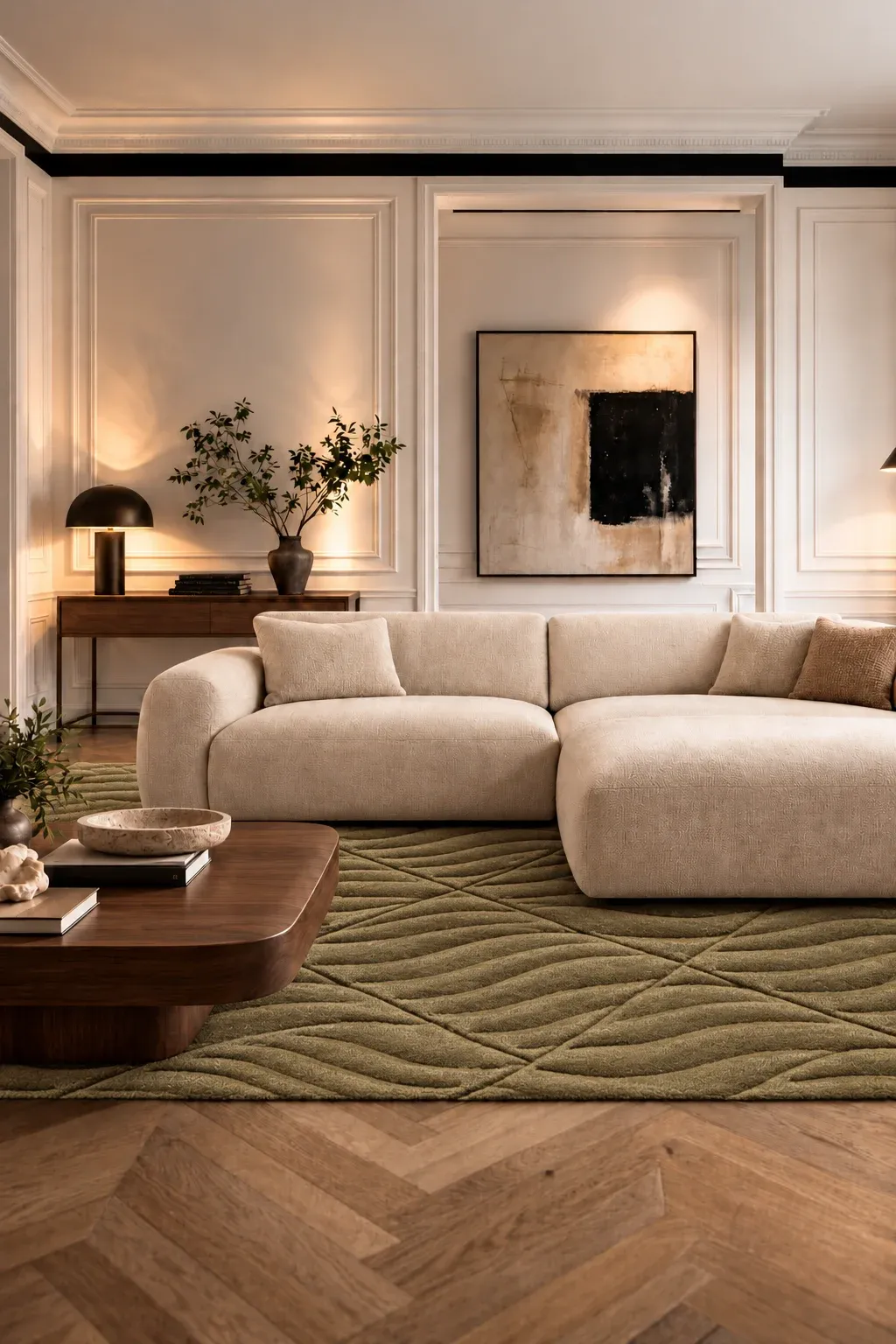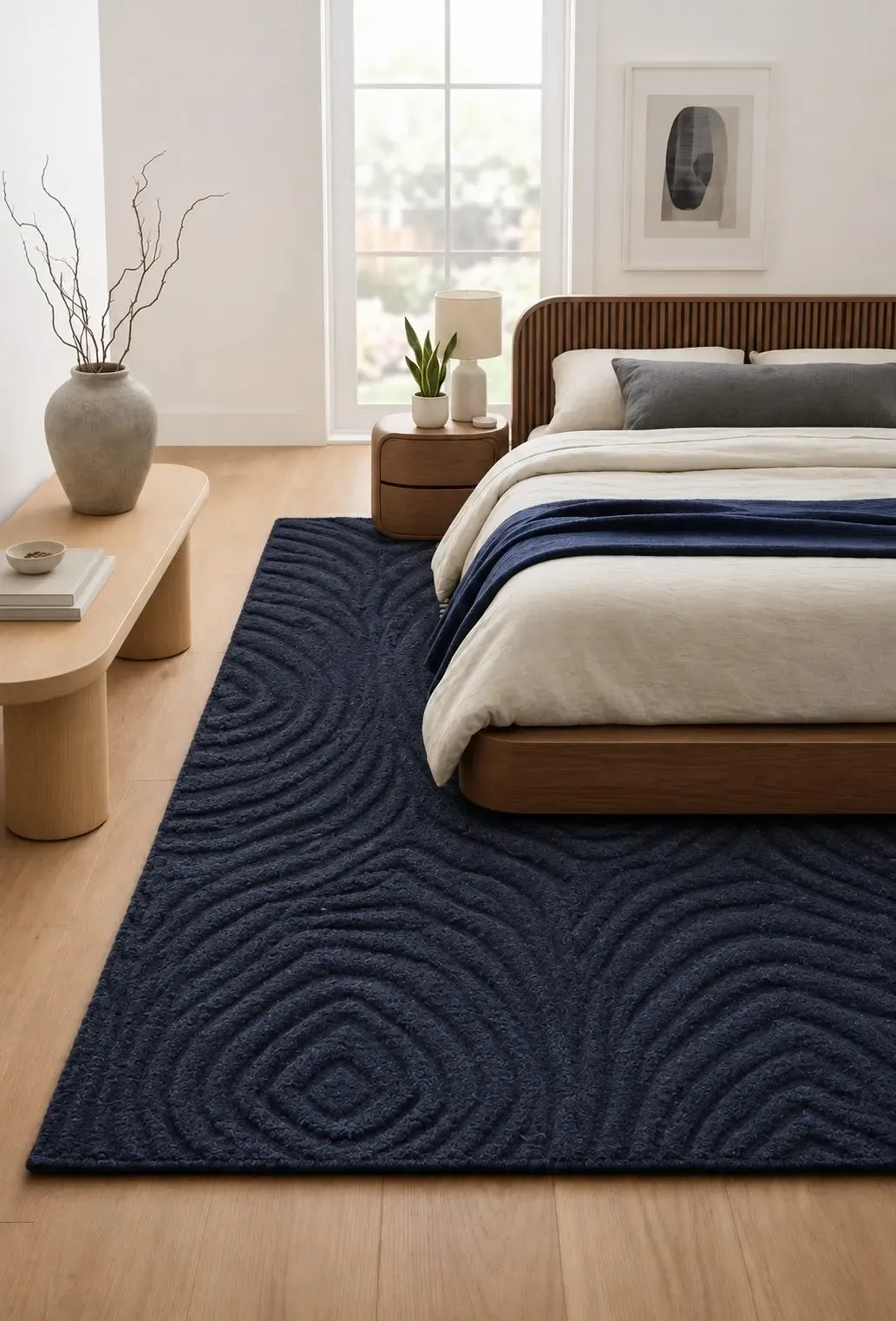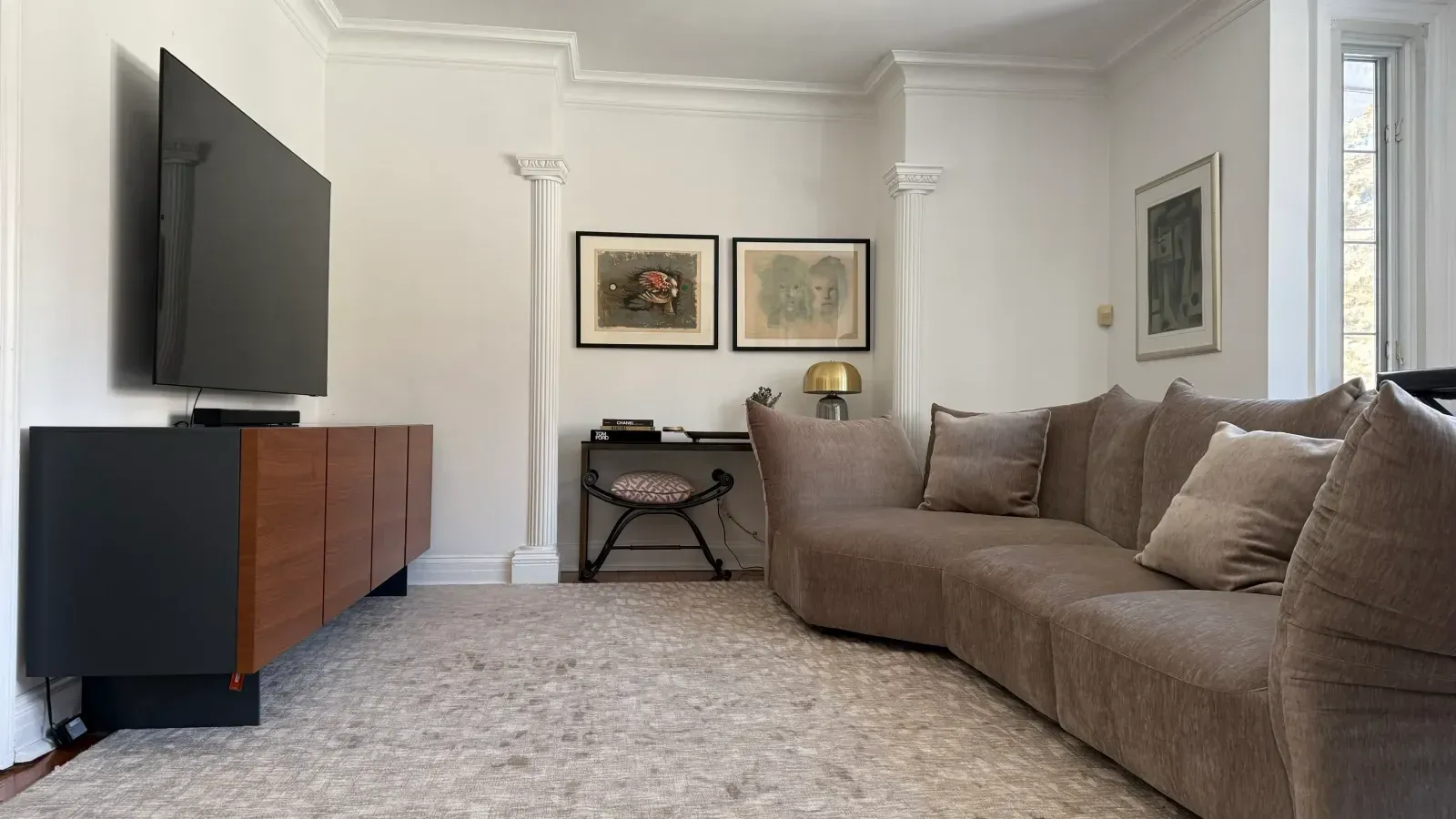
In a room with little ornament, small details become more expressive. The grain of timber, the curve of a chair, and the way afternoon light catches a rug each has room to be noticed.
Luxury area rugs bring softness to that openness. They gather furniture, warm the floor, and introduce texture that reveals itself slowly. Their beauty lies in how naturally they belong.
Why Restraint Is a Choice, Not an Absence
Minimalism is often mistaken for subtraction, as though a room becomes minimal simply by removing enough things from it. Restraint works differently.
It asks us to look more closely at what stays. A few well-chosen pieces can give a room warmth and presence, provided there is a thoughtful relationship between them.
A few principles separate a considered, restrained room from one that merely looks bare:
- Material quality matters more once fewer objects are competing for attention
- A neutral palette still needs tonal depth, not a single flat shade repeated everywhere
- Proportion decides whether a room feels resolved or simply empty
A rug brings these decisions together beneath our feet. Its colour might sit close to the flooring, allowing the texture to emerge first. Or a darker border might trace the seating arrangement, giving an otherwise open room a gentle sense of enclosure.
Luxury rugs have room for both approaches. Restraint leaves space for colour and pattern when they contribute to the whole.
Choosing Area Rug Styles for Different Room Functions and Aesthetics
The same sense of calm can take different forms throughout a home. In one room, it comes from the generous reach of a rug beneath the furniture. In another, it begins with softness beside the bed.
The Living Room, Where the Rug Leads
A rug gives a seating arrangement somewhere to settle. The sofa and chairs begin to feel connected, with enough space between them for the room to breathe.
When considering living room area rug sizes, begin with the seating group rather than the coffee table. Letting the front legs of the main seating pieces rest on the rug is a useful starting point; in a larger room, a more generous piece can hold them entirely.
Texture can then bring the arrangement into focus. A low wool pile might lend softness beside a stone table, while a restrained silk detail catches light beneath the edge of a chair. Hand-knotted rugs can offer this depth, with fibre and construction chosen to suit the room’s daily use.
There is no need for every surface to share the same shade. A little tonal distance between rug, upholstery and floor allows each material to remain distinct.
The Bedroom, Where Softness Speaks First
The bedroom offers a more intimate encounter with a rug. Before its pattern is fully noticed, there is the feeling of it beneath bare feet.
A rug beneath the lower two-thirds of the bed can create that welcome, where the layout allows. It should extend far enough beyond the sides and foot to provide a comfortable landing. In a smaller room, a runner on either side can offer a similar pleasure.
A softer pile may feel at home here, provided cleaning and door clearance have been considered. Gentle tonal changes or a barely visible motif can sit quietly beside linen, timber and the folds of bedding.
The room needs little more when these textures feel right together.
The Dining Room, Where Precision Matters Most
Beneath a dining table, the rug becomes a frame for gathering. Its edges give the setting definition, while the weave introduces softness among the harder lines of chairs and table legs.
Its proportions need to accommodate movement. Check that chair legs remain on the rug when the chairs are pulled back for someone to sit or stand.
A flatweave or low pile generally allows easier chair movement, while fibre choice and cleaning requirements deserve attention wherever food and drink are served.
These practical decisions support the atmosphere. A chair that moves easily and a rug that comfortably holds the setting let the room feel effortless.
The Entryway, Where Less Truly Is More
An entrance introduces the home a little at a time. A woven surface beneath the doorway can offer the first hint of the colours and textures waiting beyond it.
Let its proportions follow the architecture. A runner can draw the eye along a corridor, while a broader entrance may welcome a wider piece with exposed floor around its edges.
A mid-tone or subtle pattern can make everyday dirt less conspicuous. Door clearance and an underlay suitable for the rug and flooring help the piece sit comfortably in a space crossed many times a day.
Even here, where encounters are brief, texture can leave an impression.
When Texture Holds the Light
In a restrained room, the surface of a rug has time to reveal itself. What appears almost plain from the doorway may show a fine grain, a change in pile or a thread of lustre when seen more closely.
Wool often brings a soft, matte warmth. Silk introduces a different response, shifting with the light and the direction from which it is viewed. Together, they can give luxury rugs depth within a closely related palette.
Hand-knotted rugs may reveal subtle variations in yarn and shading, traces of the hands that made them. Handwoven and hand-tufted surfaces offer their own possibilities for texture; the choice rests on the finish, feel and use the room calls for.
Understanding the character of different rug fibres helps connect these visual qualities with everyday life. A luminous surface and a resilient one each have their place.
Bring a physical sample into the room before deciding. Place it beside the flooring and upholstery, and return to it as daylight gives way to evening. The quieter the palette, the more these small shifts can matter.
A Rug Shaped Around the Room
Sometimes a piece from an existing collection feels immediately at home. Its dimensions hold the furniture comfortably, and its palette finds a natural conversation with the surrounding finishes.
Other spaces ask for a more particular response. An unusually long seating arrangement, an irregular footprint or a shade drawn from a favourite fabric may lead towards bespoke rugs and carpets.
At Giada, we bring four generations of rug-making heritage and our family-owned mill in India to these conversations. As a seasoned rugs manufacturer, we work with designers, architects and private clients to develop the dimensions, colours and compositions that give each piece its place.
Our bespoke design process begins with the room: its light, proportions and the way it will be lived in. Beginning while furniture and fabrics are still being considered allows the rug to help shape the scheme.
Accurate measurements and physical samples bring that vision into focus before production. There is pleasure in this gradual refinement, watching a colour find its warmth or a texture take on the depth first imagined.
Where Restraint Finally Rests
The beauty of a minimalist room often becomes clear through living in it. There is the softness beneath a chair, the ease of moving through the space, and the changing light across a woven surface.
Luxury area rugs contribute to that experience through thoughtful proportions and materials chosen with care. Whether selected from our collection or created with us, a rug finds its place in the room through these relationships, quietly enriching the everyday.