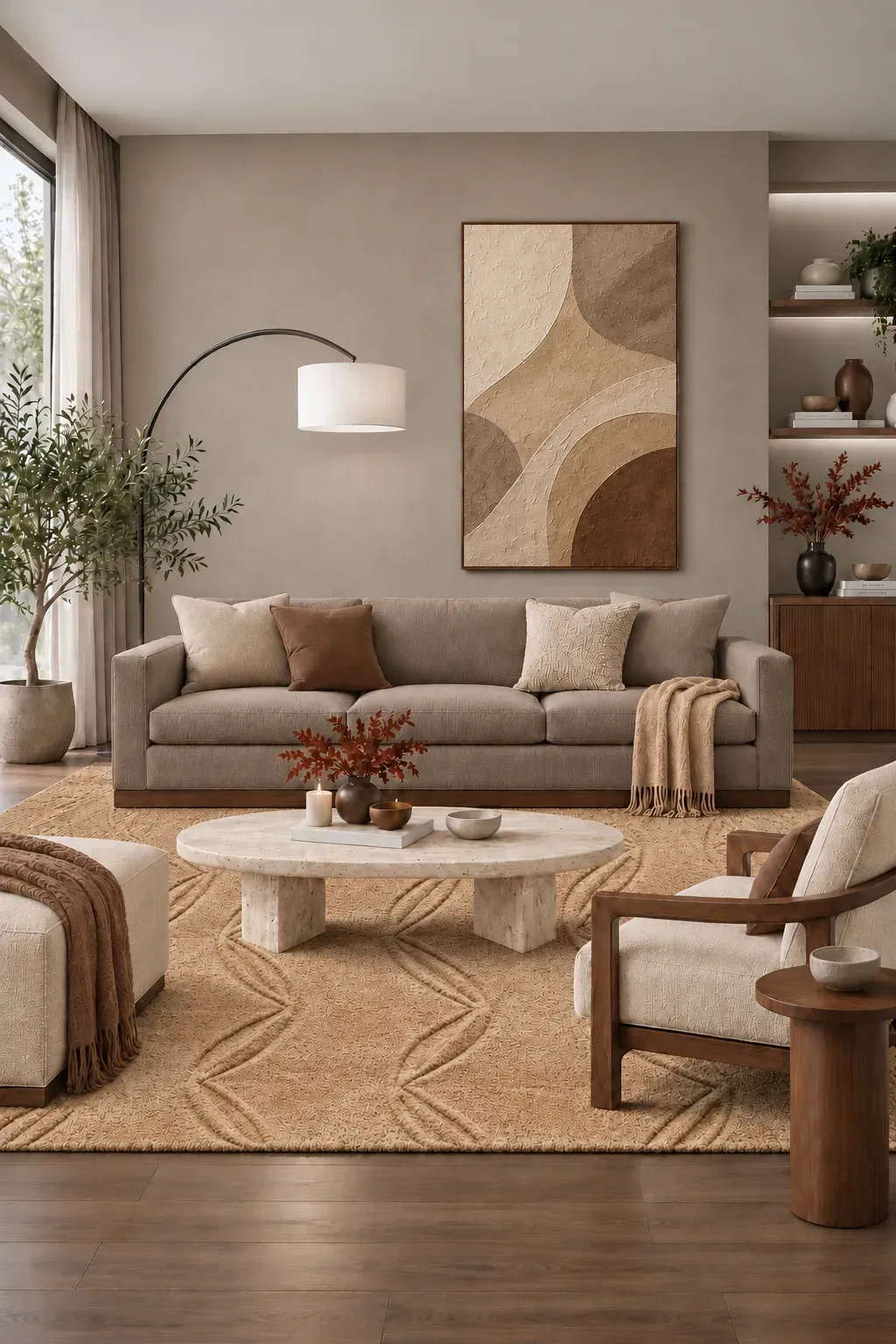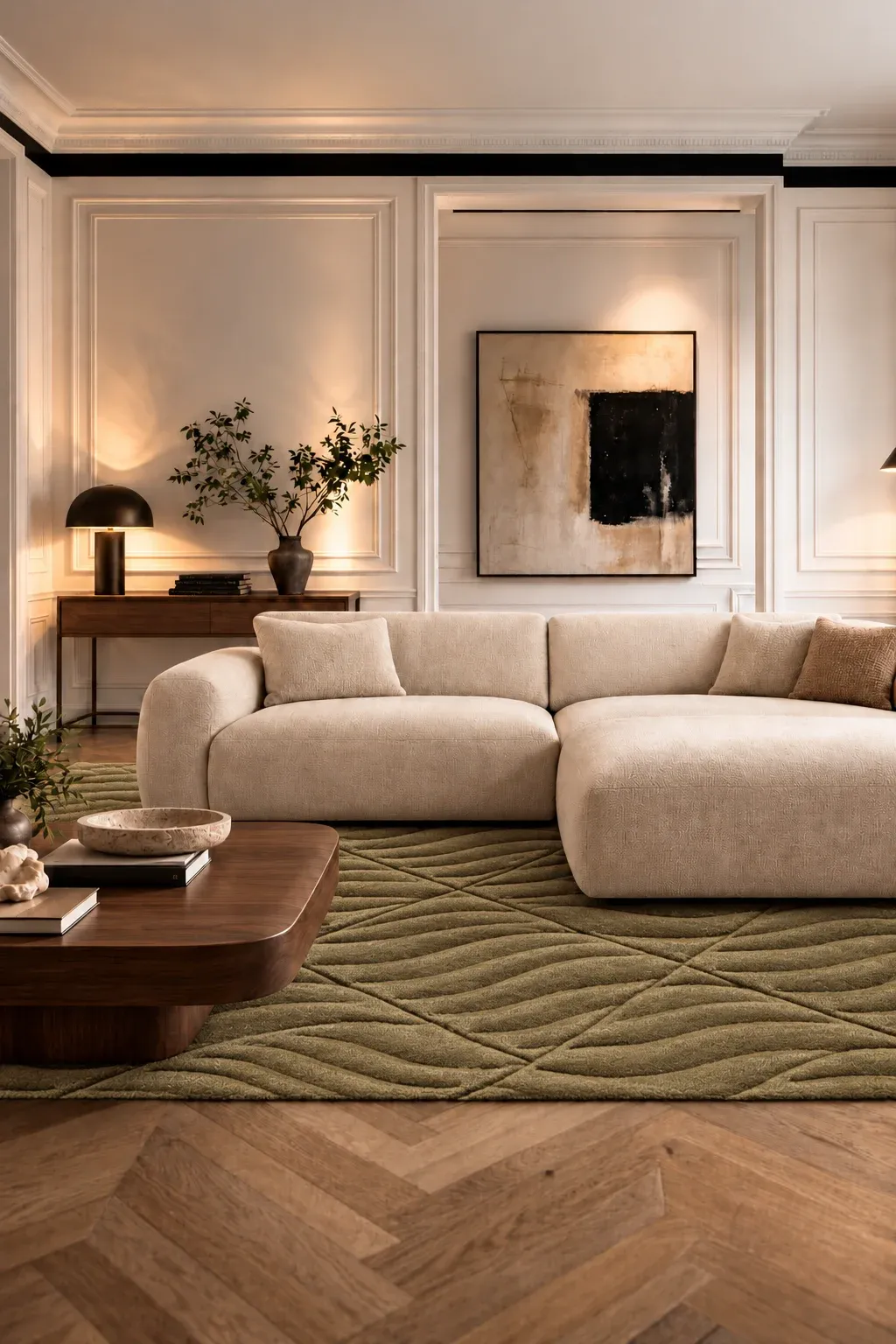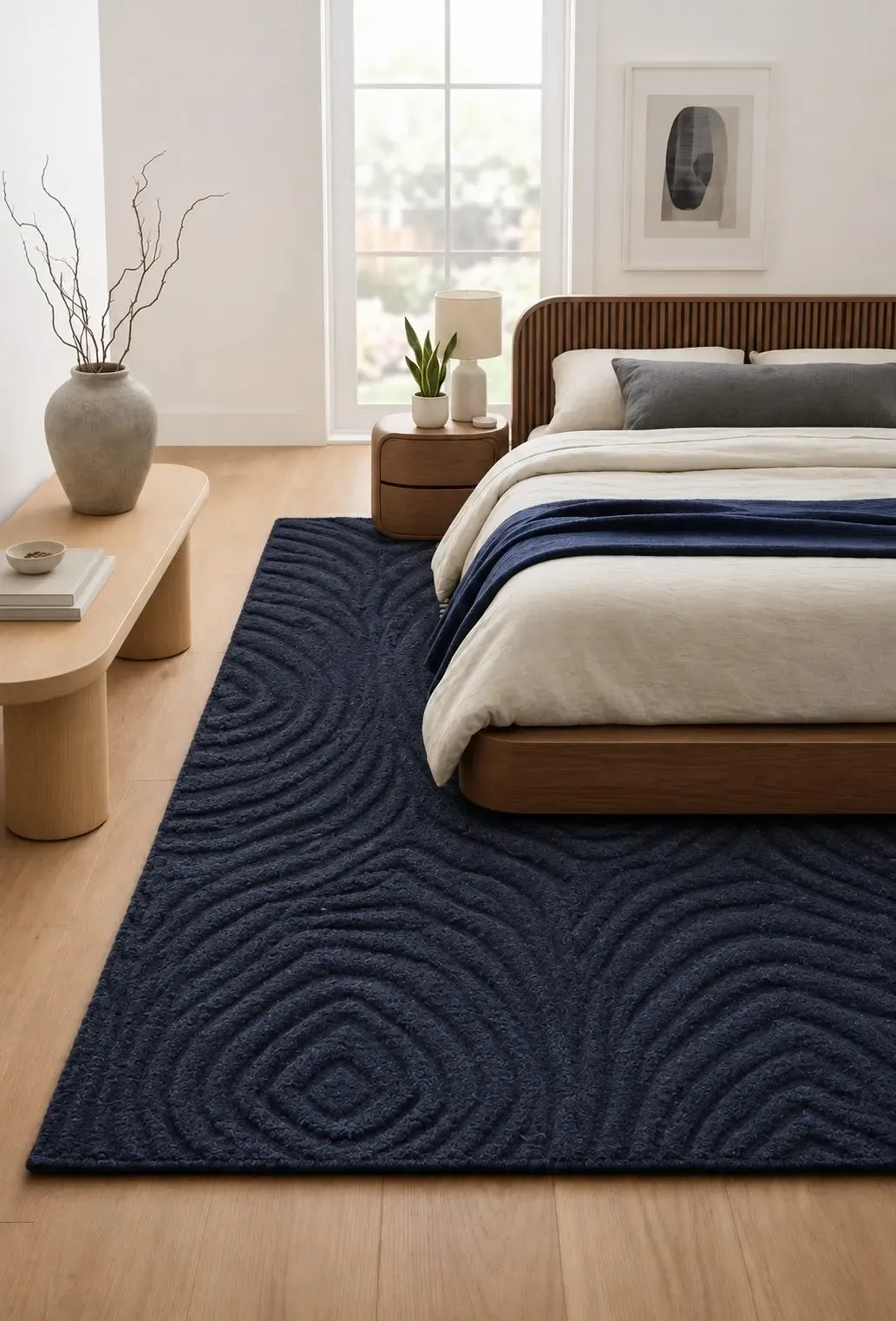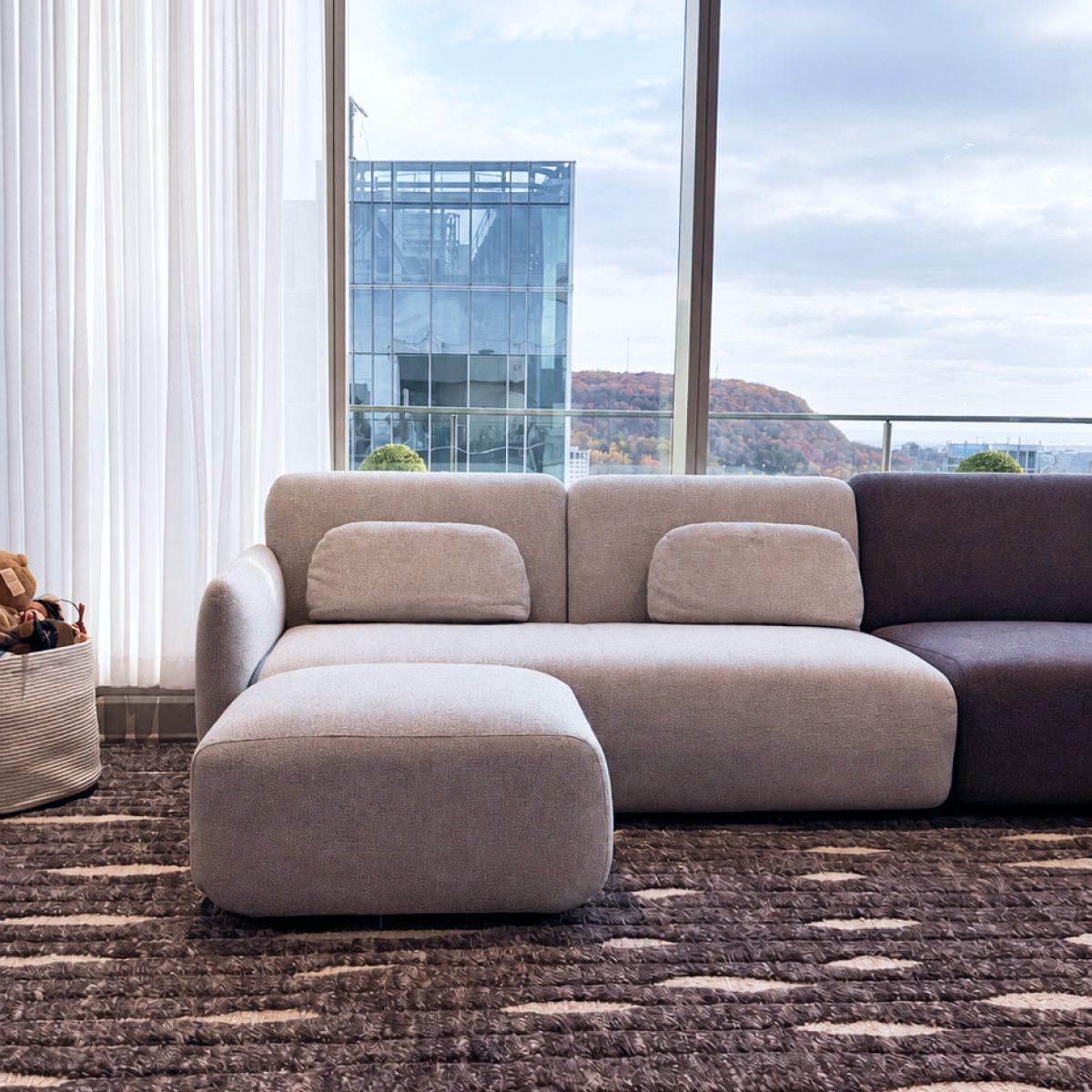
A room begins to take shape long before the furniture arrives. Sometimes, its direction comes from a rug: a shade that finds its way into the upholstery or a woven line echoed in the curve of a chair.
At Giada, we see a designer rug as part of that early conversation. It can give an open space definition and bring warmth to the architecture, becoming a piece the rest of the room grows around.
How to Use Rugs in Interior Design to Define a Space
We begin by considering what a room needs to do, alongside the atmosphere we want to create. The rug’s placement helps give that intention a visible form.
- Zoning a Room Without Walls
An open floor plan gives light and movement room to travel. Yet a seating area can feel adrift when nothing connects the furniture beneath it. 1. A rug beneath the seating group gives the arrangement a shared boundary 2. A separate dining rug can distinguish the table from the surrounding living space 3. An entry rug creates a sense of arrival, marking the transition into the home These boundaries remain gentle. The eye understands where one area ends and another begins, while the room retains its openness. Leave enough exposed floor between rugs for each arrangement to feel distinct.
- Letting Colour and Pattern Carry Meaning
A rug’s palette can become a thread running through the interior. A muted blue might reappear in a ceramic vessel; a warmer note might draw out the grain of nearby timber. There are several ways to build that relationship: 1. In a quiet room, a richer colour can give the scheme a focal point 2. Where patterned fabrics already hold attention, a tonal rug can offer somewhere for the eye to rest 3. A rug can echo an existing finish or introduce a new accent that is picked up elsewhere The colours need not match exactly. Sometimes a slight difference gives the room its depth, allowing the rug and furnishings to feel connected without becoming indistinguishable.
- Finding the Right Scale
Proportion is where a room can feel unsettled, even when each individual piece has been chosen well. A small rug beneath a generous sofa may leave the seating looking disconnected. 1. Let at least the front legs of the main seating pieces rest on the rug as a useful starting point 2. Under a dining table, allow enough room for chair legs to remain on the rug when someone sits or stands 3. Check the rug against door swings and circulation routes, keeping its edges clear of awkward transitions A larger rug can help unite a seating arrangement, but the room’s dimensions still matter. Marking the proposed outline on the floor makes its relationship with the furniture easier to judge.
What Craftsmanship Brings to the Room
The character of handmade rugs often becomes clearer at close range. A surface that appears quiet from the doorway may reveal a fine grain or a subtle change in shading as you approach.
Different methods of making offer different possibilities.
- Hand knotting can support intricate drawing and subtle colour transitions. The level of detail depends partly on knot density and the yarn used
- Handweaving can give the weave itself a visible rhythm, bringing interest to a restrained design
- Hand tufting allows expressive changes in pile, creating relief where the design calls for a more sculptural surface
Material shapes the effect just as strongly. Wool often brings a softer, matte appearance. Silk can introduce lustre that shifts with the viewing angle, changing the way a pattern reveals itself.
Our guide to different rug fibres explores how these choices influence the surface and its suitability for everyday use.
Handmade does not mean every rug will perform or age in the same way. A piece chosen for a busy family room needs to answer different demands from one placed in a quiet bedroom. Care and exposure to sunlight will also affect how it changes over time.
The term 'designer rug' has no universal technical definition. For us, the meaningful question is how well the design and making serve the space. Fine detail has its place, but a simpler weave can be equally compelling when its texture belongs within the room.
Where Do Interior Designers Buy Rugs? A Guide to Sourcing
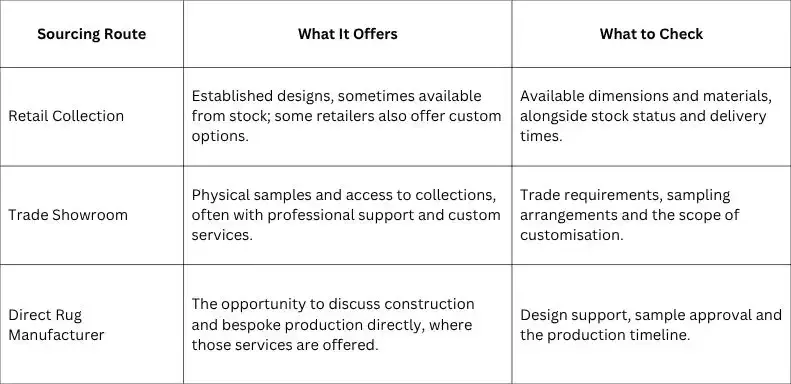
Designers draw on different sources according to the project. An existing collection may hold exactly the right piece. Elsewhere, an unusual footprint or a particular material calls for a custom commission.
The distinction is less about which route is superior and more about what each can offer.
At Giada, we work directly with designers and private clients through our family-owned mill in India. Our four generations of rug-making heritage inform the choices we explore together.
A conversation might begin with a floor plan or a fabric sample. From there, we consider how the rug will sit within the space and which materials will give it the desired feel.
Working with a rug manufacturer in this way creates room for refinement. Physical samples help test colour and texture before production, while confirmed dimensions establish the piece’s relationship with the layout.
The process takes time. Allowing for sampling early gives those decisions the attention they deserve.
Begin With the Room
A rug can enter a project at different stages. Bringing it into the conversation early creates more opportunities to develop the scheme around it, especially when a custom piece is being considered.
We work with designers, architects and homeowners to understand what the space asks of the rug. Our bespoke design process gives that brief time to develop through material exploration and sampling.
The Rug Becomes Part of the Room
A rug is rarely the first thing anyone names when describing a beautiful room, yet it is often central to how the space feels.
Its proportions draw the furniture together. Its surface brings another quality of touch, and its colours find quiet connections with the objects around it. Chosen with care, a handmade rug becomes part of the room’s character, felt long before anyone thinks to explain it.
If you have a room in mind, begin a conversation with us. A small detail you have already chosen may be enough to suggest where the design could go next.